Listen on:









Episodes

Tuesday Sep 22, 2020
Tuesday Sep 22, 2020
What you’ll learn in just 17 minutes from today’s episode:
Find out about investment properties that give him the most profit, at the same time providing returns for his investors
Learn why forging good relationships matter when looking for good partners and investment deals
Learn about the best practices for the maintenance and the management of properties
Resources/Links:
Maintenance Man to Millionaire: Real Estate Wealth Creation for Everyday People by Glenn Gonzales
Summary:
Glenn Gonzales has been in the business for the past 30 years. He started as a building maintenance man, learned the industry, and ran his own property management company. He then purchased 4500 units and in 2018/19 he sold the majority of those units.
In this episode, Glenn talks about his wide range of experience in the maintenance and the management of properties and how that experience prepared him to eventually own his management company as well as several other multifamily units.
Topics Covered:
01:01 – His primary focus of concern as far real estate is concerned
01:19 – What he loves about the investment strategy he chose
02:49 – Why he chose to sell versus hold on for long-term before
03:16 – The transition from being a maintenance guy to buying apartments
06:48 – How he dabbles from one role to another
09:16 – The time he finally got to buy his own apartment
12:02 – How he found other deals from the first time he did
Key Takeaways:
“Part of my preference for selling versus holding on was where I was in my station in life. I wanted money in my pocket. And that was the quickest way to put more money in my pocket.” – Glenn Gonzales
“I learned a very valuable lesson of how important it is to have a good maintenance guy and a good manager. Because you can’t have a successful apartment complex without both of those people being on the same team and working together.” – Glenn Gonzales
“For 25 years, I navigated through property management with several different management companies. And along the way, I was just getting more and more and more experience for sure, what to do and what not to do.” – Glenn Gonzales
“Getting 4,500 units, it’s not that simple, but yes, relationships and being in the right place and the track record to experience the 25 years in the trenches, so to speak, it gave me the experience because I could tell what was a good deal from what was a bad deal.” – Glenn Gonzales
Connect with Glenn Gonzales:
obsidiancapitalco.com
LinkedIn
Connect with Dave Dubeau:
Property Profits Podcast
www.davedubeau.com
www.investorattractiondemo.com
Facebook
LinkedIn
Enjoyed the Podcast?
Please subscribe on iTunes for updates
Friday Sep 18, 2020
Friday Sep 18, 2020
What you’ll learn in just 17 minutes from today’s episode:
Find out what Real Numberz is all about and how it helps organize your investments
Find out how to test run real estate without having so much risk and earn a decent potential of return
Learn why you have to trust your partners but still verify
Resources/Links:
realnumberz.com
Summary:
Dr. Paul White is a former orthodontist and best-selling author turned real estate investor. With his son Trey managing his own investments, Dr. Paul created Real Numberz, the only comprehensive app in the real estate industry for investors with diverse portfolios of assets.
Dr. Paul believes the key to achieving financial freedom has as much to do with optimizing your existing investments as it does to acquire more of them. The mission of Real Numberz is to revolutionize the passive real estate investor experience, empower individual investors to control their investments rather than letting their investments control them, and give any real estate investor, no matter their level of experience, the tools they need to achieve their freedom with less time, effort, and anxiety.
In this episode, Dr. Paul shares what made him shift from dentistry to real estate. You will find out how he developed a business software that helps organize all your investments even when he, himself is not a programming whiz. Learn about his multiple real estate investment strategies that made him successful all these years.
Topics Covered:
00:43 – What’s the shift all about from being a dentist to becoming real estate investor
01:09 – How long has he been with being a dentist before finally jumping into real estate
02:48 – What investment strategy he invested in the beginning
03:31 – What multiple real estate strategies is he into now
04:16 – What is Real Numberz all about
07:00 – The advantage and disadvantage of doing real estate actively versus passively
08:36 – Trusting but at the same time verifying
09:46 – How to test the waters in real estate without having too much risk
11:08 – How was he able to do everything in Real Numberz even if he’s not a programming guy
Key Takeaways:
“The realization, I guess Warren Buffett said it best, he said, ’If you don’t make money while you sleep, you’ll work till you die.’ And that was sort of a wake-up call for me, and that started my journey to alternative investments.” – Paul White
“I think what Reagan said a long time ago, ‘Trust but verify,’ is sort of the mantra that I would sing to all of them.” – Paul White
“Most investors make the mistake of just handing people money and never going to the site or never having to pay somebody to drive by to see if it’s there. Or anything else about the operator, and talking to other investors that have worked with them. Maybe you have done a background check on those people. There’s a lot that needs to be done because it’s a lot of money that you’re usually putting out there.” – Paul White
“I think the best thing you can do is a partnership, either with a seasoned investor or a seasoned operator, maybe rehabbing and renting a house together, so everything sort of split it, you can even do the same thing with some private lending as well.” – Paul White
“You know what, I’ve done a lot of syndications over the years and I will tell you, the operators that don’t have any money in the game makes me nervous.” – Paul White
Connect with Paul White:
realnumberz.com
Facebook
Connect with Dave Dubeau:
Property Profits Podcast
www.davedubeau.com
www.investorattractiondemo.com
Facebook
LinkedIn
Enjoyed the Podcast?
Please subscribe on iTunes for updates
Tuesday Sep 15, 2020
Tuesday Sep 15, 2020
What you’ll learn in just 17 minutes from today’s episode:
Learn about the biggest benefits of rehabbing and wholesaling real estate
Find out what it is about wholesaling that appeals to most people as an investment strategy
Discover low-cost ways of finding deals
Resources/Links
Flip Hacking Live
Facebook Group
7-Figure Flipping
Summary:
Beka Shea is a former Navy Mechanical Engineer Officer. She started real estate rehabbing full time in 2013 after which she laid the foundation to grow her real estate investments by Scaling. She’s rehabbed 60 houses, wholesaled 120 deals, and has 12 rentals. She now works full time with the company 7-Figure Flipping (https://7figureflipping.com) guiding accountability groups and member success.
In this episode, Beka shares what her transition was like from Navy Officer to Real Estate Investor, how she dabbled in rehabbing and wholesaling real estate, and finally what made her decide to devote herself full time to rehabbing real estate. What was it in rehabbing real estate that got her so focused on it?
Topics Covered:
01:25 – Beka defines what is rehabbing and wholesaling
02:18 – The biggest benefit to rehabbing properties
03:39 – How was the transition from being a Navy officer to real estate
04:57 – What is wholesaling and what are the benefits of getting into it
05:58 – What appeals to most people about wholesaling
07:26 – How was it like juggling between rehabbing and wholesaling properties
08:20 – Talking about working full-time rehabbing
10:00 – Low-cost deals for finding deals
12:38 – How she put up capital for her rehab deals
14:11 – How does she secure her investors’ money
15:11 – Typical price point for her property deals
16:37 – What is Seven-Figure Flipping Mastermind
Key Takeaways:
“After doing a whole bunch of investing, I would say to your audience that I have noticed there’s a tendency of what type of people do better in which arena.” – Beka Shea
“Rehabbers tend to have this project management bent. You see a lot of former accountants, engineers, contractors who do really well in the rehabbing space and I think it’s because they like breaking things down into the process.” – Beka Shea
“Managing the process, wholesalers as people assign deals. They tend to love the art of the deal.” – Beka Shea
“I personally love the rehabbing side of things, taking something that other people would view as just broken down and worthless and being able to see the potential in it and then unlock that.” – Beka Shea
“So, wholesaling to me is a sales marketing company. I think a lot of people get into marketing, they often talk about them, like, you know, me, me, me, I buy houses, I fix houses, the sellers don’t care. They want to know how are you going to make their lives better. So, it starts with the marketing piece.” – Beka Shea
“What is it with wholesaling that people like it so much as an investment strategy? It’s fast. And if you’re good at making deals and you recognize your value, I mean, there is a lot of money to be made.” – Beka Shea
“When I wanted to start scaling my business, I joined a mastermind, which is a really cool way to get around people doing more to get out of just your local market and be exposed to people doing stuff on a greater scale.” – Beka Shea
Connect with Beka Shea:
Facebook
Instagram
YouTube
Connect with Dave Dubeau:
Property Profits Podcast
www.davedubeau.com
www.investorattractiondemo.com
Facebook
LinkedIn
Enjoyed the Podcast?
Please subscribe on iTunes for updates

Thursday Aug 27, 2020
Thursday Aug 27, 2020
Learn about a real estate investment that has survived COVID 19’s harsh effects and still makes cash flow margins every single month, find out investment strategies that will cost you the least amount of risk, as well as money, and discover about the marketing strategies he employed to get his units filled with renters even amidst the pandemic.
Resources/Links
https://www.therealsystem.com/get-access
Summary:
Jorge Contreras is a real estate investor and a coach with 15 Airbnb that has a 6+ figure annual cash flow.
In this episode, Jorge shares how he has pivoted in his Airbnb deals during these weird times without running out of cash flow every month. He also shares about his Airbnb strategy which gives you zero risk and costs nothing if a deal goes sideways.
Topics Covered:
01:03 – How has the pandemic affected Airbnb market
05:19 – Three strategies to go with Airbnb
06:58 – Which strategies does he recommend for most people
07:52 – Why does he not recommend the leasing and subleasing strategy
09:49 – Describing a scenario when a subleasing deal has gone bad
11:37 – Some Airbnb tips from Jorge
14:05 – Is a longer-term rental still permissible after laws prohibiting Airbnb takes place
Key Takeaways:
“How do we make adjustments now to bring more eyes to our short–term rental portfolio? And so, we started marketing our properties on websites that market to corporate housing, and nurses who are traveling for work for COVID to work at hospitals.” – Jorge Contreras
“We started bringing down the pricing where we started to attract locals who were living, say near downtown LA in tiny little apartment spaces where they had no social distancing and they were going down the elevator or something and they wanted to rent a single-family home with some space.” – Jorge Contreras
“Between the staycation, there’s the corporate housing and the nurses, we actually made less money, a lot less money. But we were still making some small profit cash flow margins every single month, even during the worst month of March and April.” – Jorge Contreras
“I believe that co-hosting is a great way to get your feet wet. You also learn management, marketing, customer service. It’s a great way for people that want to get into real estate investing, but don’t have a ton of money.” – Jorge Contreras
“As an investor, we always look at how can I make the most amount of money with the least amount of risk and the least amount of money and the best I did is co-hosting.” – Jorge Contreras
Connect with Stuart Grazier:
Instagram
Facebook
YouTube
Connect with Dave Dubeau:
Property Profits Podcast
www.davedubeau.com
www.investorattractiondemo.com
Facebook
LinkedIn
Enjoyed the Podcast?
Please subscribe on iTunes for updates

Monday Aug 24, 2020
Monday Aug 24, 2020
Discover about driving distance properties and what makes them COVID 19 threat resistant, find out which properties provide Avery the highest ROI and efficiency, and learn how to invest in Airbnb, and have everyone do it for you while you manage remotely without costing you 20% to 40% of your gross.
Resources / Links:
theshorttermshop.com
Summary:
Avery Carl bought her first rental property at age 26 on a 37,000 salary. Through strategically investing in short-term rental properties in mature vacation rental markets, she was a millionaire by 31. She now owns a portfolio of 24 properties and is the CEO and founder of the Short Term Shop, a real estate team that helps investors acquire short term rental properties in the most recession-resistant markets, and trains them on the methods that led her out of the corporate rat-race and into financial freedom.
In this episode, Avery shares about the very reason she focuses on the short-term rental properties and how this portfolio survived the pandemic’s repercussions. She also talks about investment properties you can take part in depending on the price and ROI range that works for you and how to manage short-term rental properties remotely without losing almost half of your gross profit to expenses.
Topics Covered:
01:43 - How is COVID 19 affecting her short-term rentals portfolio
05:58 - What got her into short-term rentals and what made her focus on this strategy
09:32 - What types of properties are set up for her short-term rentals
10:02 - What price points can investors look into
12:27 - How are her properties grossing in income on a comparison of standard rental versus
short-term rentals
13:15 - Net income you get after all the expenses, management fees including mortgage
13:39 - Mistakes people in the early stage of short-term rentals commit
14:48 - Does she work with foreign investors
Key Takeaways:
“We have seen a boom in the drivable vacation rental market because people are busting to get out of the house, but they don't want to get on a plane.” - Avery Carl
“And they don't want to go somewhere like Disney, or even just a big metro area where they're going to be around a lot of people. They're all driving to the vacation areas that they can get to in their cars. We're actually seeing higher prices per night than we ever have, even on holidays.” - Avery Carl
“The regional drivable markets have bounced back in full force, the metro markets Nashville, still struggling a little bit down the road. The bigger cities where there's still a lot of lockdowns struggling as well.” - Avery Carl
“In the Smokies, condos don't really work. The tourists want to stay in cabins, they want the mountain experience whereas if you go down to Florida, condos are totally okay. People love condos on the beach. You kind of have to pay attention and do some research on what's expected.” - Avery Carl
“With single-family, it's not really a one-size-fits-all, which is a really good thing about this investment strategy is that nobody is priced out. There's not a lot of barriers to entry, like say with multifamily. Newbies or really experienced investors can find a price range and ROI range that works for them.” - Avery Carl
“If you're self-managing, two people can gross the same exact thing and have wildly different nets, just depending on how they manage. But with a mortgage, you should be able to net roughly 40% of your gross in your first year. As you get better reviews, you'll be able to raise your prices and you can do better than that. But to start you're looking at right around 40%.” - Avery Carl
“Analysis paralysis is the worst thing that any investor of any type can do to themselves.” - Avery Carl
Connect with Avery Carl:
theshorttermshop.com
LinkedIn
Twitter
Facebook
Connect with Dave Dubeau:
Property Profits Podcast
www.davedubeau.com
www.investorattractiondemo.com
Facebook
LinkedIn
Monday Aug 10, 2020
Monday Aug 10, 2020
Discover how a real estate investment company’s business philosophy can allow them to not just earn money, but also fulfill their social responsibility, find out which investment strategy Stuart and his partner focus on to bring in steady cashflow in a short period of time, and learn about which investment strategy military men and busy professionals can use to earn passive income every single month.
Resources/Links
Filling the Storehouse Podcast
Summary:
Stuart Grazier is an active duty Navy pilot who has served 18 years in the US military. Starting in June of 2018, his company Storehouse 3:10 Ventures has acquired and sold approximately 50 turnkey rental properties, averaging 2-4 properties per month, where they are providing rehabbed, cash flowing rental properties to their network of military/veteran and patriot investors.
In this episode, Stu shares the purpose for which their company came to be aside from replacing their military income when retirement comes. He also talks about investment opportunities military men and busy professionals can invest in to earn passive income without them directly managing properties. How he teaches investors which model to follow depending on their goals.
Topics Covered:
01:19 – How he got started in real estate
02:13 – The story behind their company called Storehouse 310 Ventures
03:32 – Their primary real estate focus and their target market
05:05 – What market do they buy their properties from and the primary reason they chose that market
07:34 – What roles do Stu and his partner play in the company, and how do they run their business from a distance
09:26 – Where and how do they find deals
11:24 – Why turnkey property investment is good for people in the military and busy professionals
13:35 – Which type of investments do most military men are interested in
15:20 – How one’s goal during retirement determines which turnkey strategy to invest in
16:13 – What his single-family type transactions look like
Key Takeaways:
“We pick Wisconsin for our properties because it’s a great cash-flowing market. The Midwest has great cash flow markets in general. It’s very affordable to live, so the price to rental index, makes for that great cash flowing rental properties.” – Stuart Grazier
“In finding properties, we’ve created some great relationships with wholesalers, we’re pretty much on every single buyer’s list. We’re in all the Facebook groups and the local Ria meeting groups and stuff like that.” – Stuart Grazier
“We don’t do a whole lot of direct mail marketing or direct to seller type marketing yet, we really haven’t needed to because we’ve just gotten on everyone’s buyers’ list and we’ve gotten a great deal flow that way.” – Stuart Grazier
“Most of our investors are very early investors, it’s their first time that they’re going to buy a rental property, we’re trying to teach the model of long term buy and hold assets, where over the long run is going to provide solid cash on cash return and bringing that positive cash flow every single month.” – Stuart Grazier
“What we’re teaching is, you buy one house, its cash flows, you buy two houses, that’s cash flows, and you can kind of turn this into a little mini-empire if you will, and you’re holding these properties, your tenants are paying off your mortgage for you.” – Stuart Grazier
Connect with Stuart Grazier:
www.storehouse310turnkey.com
Facebook
Instagram
YouTube
LinkedIn
Connect with Dave Dubeau:
Property Profits Podcast
www.davedubeau.com
www.investorattractiondemo.com
Facebook
LinkedIn
Enjoyed the Podcast?
Please subscribe on iTunes for updates

Thursday Aug 06, 2020
Thursday Aug 06, 2020
Find out what made Mark focus on multifamily properties instead of single-family homes, learn about an effective marketing strategy to use when looking for investor partners, and discover how an underperforming property can be made into a well-oiled machine bringing in steady cash flow and a big uptick in value.
Resources/Links
FREE Webinar: https://bit.ly/WEBINAR_R_07APR20
FB Group: https://www.facebook.com/groups/ApartmentBuildingInvestorsNetwork/
Summary:
In 2015, Mark Baltazar founded Peak Property Investments, a boutique firm helping passive investors generate returns through real estate – hands-free. In 2018, he co-founded Peak Multifamily Investments as an extension to bring a greater focus to acquiring and managing apartment building investments. Through coaching and passive investing opportunities, Mark works with time-starved investors to help them take action and get past the hurdles that many face along the path to financial freedom.
In this episode, Mark shares how he’s done deals in multifamily properties, focusing on underperforming assets and turning them around and increasing their ROI, values, and cash flow.
Topics Covered:
01:46 – Benefits of focusing on 12 to 20–unit size properties
04:54 – How does he find deals in multifamily properties
07:50 – A walkthrough of the deal he has done a few years back
13:10 – The advantage of getting deals from a network of agents
14:33 – How does he find investor partners to raise capital
17:16 – How does he structure the deals when working with investor partners
18:02 – Who helps qualify for financing
Key Takeaways:
“For apartment buildings, as an investor, as an operator, you have a little more control in terms of what you can do from a valuation standpoint, increased net operating income and the value of your building goes up.” – Mark Baltazar
“With apartment buildings undervalued, you’re almost paying a premium for things that are under-managed because of the upside.” – Mark Baltazar
“One of the components of multifamily that I really understood is, you put $1 in, you increase your net operating income by $1. Your valuation is a multiple of that.” – Mark Baltazar
“It’s a combination of content marketing and education, that’s a big part of how we’re attracting partners.” – Mark Baltazar
Connect with Mark Baltazar:
PeakMultifamily.ca
Facebook
Connect with Dave Dubeau:
Property Profits Podcast
www.davedubeau.com
www.investorattractiondemo.com
Facebook
LinkedIn
Enjoyed the Podcast?
Please subscribe on iTunes for updates
Monday Aug 03, 2020
Monday Aug 03, 2020
Learn about the benefits of investing internationally specifically in the US market, find out investment strategies that have brought him steady cash flow as well as long-term stability, and learn how to attract capital, the right person, and finding the best opportunities.
Resources/Links
Get on a 30-minute call and speak with Billy Keels. Click here: bit.ly/speakwithbilly
Download for FREE this eBook entitled “Grow Your Money The Smart Way”
Summary:
In the last 24 years, Billy Keels has had the opportunity to work and travel in 86 countries,learn and fluently speak 5 languages, and has lived in 3 European countries. With this personal growth experience, he also had the opportunity to develop professionally by leading multi-disciplined teams and managing businesses over $70M in the application software sector. Billy has earned his stripes as a true problem-solver as well as a team and consensus builder which are skills he’s carried into his new entrepreneurial life.
And more importantly, Billy is also a very successful and astute real estate investor, living in Europe, but doing his deals far from where he lives! In this episode, Billy shares his ideas on which countries to best invest in terms of speculating for future sales at the same time enjoying cash flow. He emphasizes the need to gain more control of your financial life through real estate (even if you have a great corporate job).
Topics Covered:
01:35 – He’s living in Europe but he’s investing in the US. Why so- what are the benefits
04:30 – How does real estate investing look like in Europe
07:51 – On getting himself out there, having the right team, and finding the best opportunities
10:34 – What investment strategy does he focus on
12:07 – Two ways you can ride along for larger multifamily opportunities
13:08 – What is his platform’s primary focus these days
14:36 – Having that proof of concept, attracting capital, and attracting the right people
17:26 – What is an alignment of purpose with the right person
Key Takeaways:
“Investing in the US was about figuring out how do I live where I really love living which is here in Europe and gain more control over my financial life, and that was being able to invest in cash-flowing assets which I have much better control of.” – Billy Keels
“In Europe, they were very much appreciation-based markets, buy low, sell high, or buy low and hold on forever, and hope that the value of the place goes up from several different types of appreciation.” – Billy Keels
“It’s difficult when you have your investor cap on because when you invest, you make sure that you’re creating not just the cash return but you want to get your return on the capital. I think it’s much easier to find those types of opportunities that create cash flow in the US market, which is one of the reasons that I’ve decided to continue to do that.” – Billy Keels
“I purchased a couple of smaller multifamily properties, duplexes, quadplexes, things like that, and then had an opportunity to buy a mobile home park. And so, the properties initially were on the East Coast of the United States in the state of New Jersey. I think at a certain point when you are ready to get started, you just have to get started, you can’t keep reading books.” – Billy Keels
“I know what it’s like to go from beginning to end of the transaction, what it’s like to build the relationships. And from that, aside from having the proof of concept, I know for sure that it’s about being able to understand what the person in front of me is looking to achieve. It’s not always about the money.” – Billy Keels
“I believe when there’s a misalignment of what your project does with what the person wants to do, it never works, like walk away, don’t even try it.” – Billy Keels
Connect with Billy Keels:
BillyKeels.com
LinkedIn
Facebook
YouTube
Instagram
Twitter
Connect with Dave Dubeau:
Property Profits Podcast
www.davedubeau.com
www.investorattractiondemo.com
Facebook
LinkedIn
Enjoyed the Podcast?
Please subscribe on iTunes for updates
Thursday Jul 30, 2020
Thursday Jul 30, 2020
Learn about laws and regulations to take into consideration when you are an operator raising for capital in syndication, know more about the rules and regulations to take into account if you are an owner-operator raising capital for your own deals, and find out the key points to take into account when you are a Canadian investing in a US-based syndication entity.
Resources/Links
BoardwalkWealth.com
Summary:
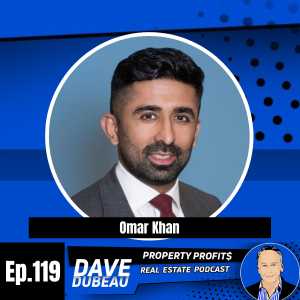
Omar Khan has advised on $4billion of M&A transactions in North America. He has a decade-plus experience across real estate and commodities. He is a global citizen who lived in Dubai, Toronto, Calgary, and Dallas.
In this episode, Omar discusses primarily the US foreign laws involved when raising capital for multifamily real estate through syndication in the US. Learn the right things to do in order to successfully raise capital while staying on the right side of the SEC.
Topics Covered:
01:19 – The real estate strategy he is focused on
02:57 – Being a global citizen – his thoughts about that
05:39 – What it’s like to do syndication in the US where regulations are concerned
07:41 – Taking a closer look at how multifamily deals work when it is being syndicated out in the US
10:33 – Key points you need to take note when you are a Canadian investing in a US-based syndication entity
13:49 – Rules and regulations for operators for raising capital in a syndication
15:26 – Rules and regulations for owner-operator raising capital for his own deals
Key Takeaways:
“It’s good to understand where other people come from because you can always pick up smaller things from people added to your toolkits, you become a more holistic, well-rounded person.” – Omar Khan
“In syndication, my average investor chips anywhere between 35 to 250,000 US dollars at a time, and some are more and some are less. And this way we raised the money. My group, I’m heading it, will take care of the debt and all of that stuff because our investors are basically getting passive returns.” – Omar Khan
“The thing that people don’t realize from a legal point of view isn’t necessarily that you can or can’t do the deal, that as a limited partner, you do have limited liability. If things go south, at worst, you can only lose the extent of the money you’ve invested. But when your name is on the loan documents, or when you’re the operator you have unlimited liability.” – Omar Khan
“The big advantage of investing in US real estate is the amount of tax write-offs you can get. It’s a fancy way of saying that I can be depositing cash in your bank account because of the return they’re generating. But on paper, I can be showing a loss because of the tax rules.” – Omar Khan
“There are specific tax breaks you get in the US that you don’t get in Canada. But it’s very important that if you are investing in an entity which is an LLC or limited liability company when you get these tax breaks, the CRA for the lack of better term does not allow you to take these tax breaks. They don’t view this entity as a pass-through entity.” – Omar Khan
“What you have to do as a Canadian is be ultra-vigilant and know that every time you’re investing in syndication you have to be investing in an entity which is an LLP, limited liability partnership.” – Omar Khan
“I’m not trying to be alarmist, what I’m trying to tell you is there are structures, rules, and laws in place. And typically, the easiest way around this is to deal directly with owner-operators, because they have some exemptions.” – Omar Khan
Connect with Omar Khan:
BoardwalkWealth.com
LinkedIn
E: Omar@BoardwalkWealth.com
Connect with Dave Dubeau:
Property Profits Podcast
www.davedubeau.com
www.investorattractiondemo.com
Facebook
LinkedIn
Enjoyed the Podcast?
Please subscribe on iTunes for updates
Monday Jul 27, 2020
Monday Jul 27, 2020
Find out Kris’ reasons why self-storage facility is one of the best ways to start investing in real estate, know more about the problem self-storage help solve and why that helps it to perform quite well even amidst the pandemic, and learn about the compelling reasons for Kris’ shift from previous investment strategies to self-storage.
Resources/Links
ReliantInvestments.com
Summary:
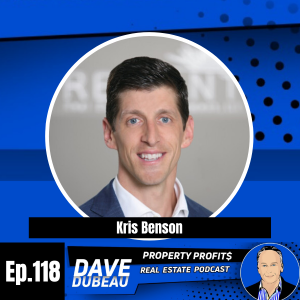
Kris Benson quit his “corporate job and elected “to find a way to stop trading my time for money and to let my money make money.” He launched his commercial real estate journey, appreciating the value of investing in tangible assets. Kris started investing in small residential units over 10 years ago and expanded to commercial multifamily properties before making the jump to self-storage.
Partnering with Todd Allen, managing principal at Reliant Investments, Kris focuses his leadership and management skills on the commercial real estate company’s investment committee, which determines what self-storage properties to purchase while growing equity and creating passive income streams for investors.
In this episode, Kris explains why the self-storage sector has performed well, even in this COVID time, compared to other asset classes.
Topics Covered:
00:54 – What is interesting about self-storage facility to invest in real estate
03:19 – How self-storage started
04:06 – The four D’s self-storage facility helps solve
06:17 – What storage facility do they focus on
08:25 – How do they plan to sell facilities that they added value on
09:30 – What made him got hooked with self-storage
12:29 – How will self-storage facility be affected if ever the economy turns worse
14:02 – If someone defaults in paying rent, how long is the storage be up for auction
Key Takeaways:
“If you look at the historical performance of self-storage comparatively with multifamily, office, retail, and industrial, it has outperformed all of them in the last 25 years.” – Kris Benson
“I’m a big believer that things that are going to happen have already happened, you just have to look in the past to find them.” – Kris Benson
“The problem that self-storage is essentially solving is giving you space and allowing you to organize. – Kris Benson
“Storage is like an operational business with a real estate play on the side.” – Kris Benson
“From my perspective, I believe that storage is somewhat insulated because it’s a small percentage of your monthly income and you’re collateralized by your stuff. Most people don’t want to get rid of it.” – Kris Benson
Connect with Kris Benson:
reliantInvestments.com
LinkedIn
Facebook
Connect with Dave Dubeau:
Property Profits Podcast
www.davedubeau.com
www.investorattractiondemo.com
Facebook
LinkedIn
Enjoyed the Podcast?
Please subscribe on iTunes for updates