Listen on:









Episodes
Friday Dec 04, 2020
Friday Dec 04, 2020
What you’ll learn in just 17 minutes from today’s episode:
Learn what character homes are, and how to go about the BRRRR strategy with these types of properties
Find out what the approximate revenue you can earn, from renting out renovated units in character homes
Learn about the essential points to consider when going for the BRRRR strategy with character homes
Resources/Links:
www.expansionproperties.com
Summary:
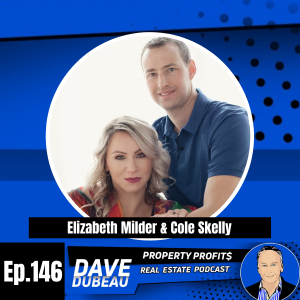
Elizabeth Milder & Cole Skelly are experts in the application of the BRRRR method (Buy-Renovate-Rent-Refinance-Repeat) of real estate investing in the Victoria market. By identifying properties with the potential for adding square footage, Cole and Elizabeth add massive value to the properties they purchase, converting single-family homes to multi-unit rentals (2, 3, and 4 units). After many properties and lessons learned, and 2 spec houses under their belts, Expansion Properties was formed. In this episode, Elizabeth and Cole talk about the strategy they specialize in, the BRRRR, where they especially get character homes to renovate and turn into rental units for them to generate cash flows and revenues.
Topics Covered:
01:40 – What is a BRRRR strategy
03:18 – What are character homes? How do they differ from historical homes?
05:08 – Getting a look at how the BRRRR strategy works with character homes
09:19 – Advantages of construction financing
10:33 – How much cash flow do they generate from renting out the units
11:46 – Approximate gross revenue per month for these kinds of properties and how much is a bank’s appraisal for them
14:06 – Number of years they been doing BRRRR strategy
15:18 – How do they get the work done with renovating the buildings and homes they acquire
17:09 – Recommendation and advice to anyone interested in the same strategy they are into
Key Takeaways:
“Basically, what we’ve been able to do you using BRRRR is, we find these older homes that have tremendous opportunity to add value by way of adding square footage, typically, we’ll dig out the basement. With that lift that gives us the ability to refinance once we’ve gotten to the end of the project and rented it and allows us to pull the money out the capital investment that we’ve put into at the outset and then use that towards another property.” – Elizabeth Milder
“The city of Victoria has a house conversion regulation where you can actually take these older 1900 houses and convert them into legal rental units without doing the rezoning process. So, it’s a character home, but we’re allowed to touch any part of the home. It’s not a heritage home.” – Cole Skelly
“This is one thing that I’ll mention because people often are scared away from deals because the price point is too high. What we’ve learned through a few scenarios now is, don’t be afraid to lowball if you have to, because you never know, it’s always a no unless you ask.” – Elizabeth Milder
“Whenever we’re analyzing a property at the outset, we’re always looking for four to $500 a month cash flow on each door. We found that that’s a really comfortable number to absorb potential vacancies.” – Elizabeth Milder
“One thing that we definitely recommend to any new investor is being very realistic about what it is that you can manage, and having a good understanding of what your finances are because this is something that a lot of people aren’t really in tune with.” – Elizabeth Milder
“I find that we find that a lot of people in talking about investing in property, they often have this kind of pie in the sky idea of what it is they want to do, but they’ve never actually thought about what it takes to see that come to fruition.” – Elizabeth Milder
Connect with Elizabeth Milder & Cole Skelly:
expansionproperties.com
Instagram
Facebook
Connect with Dave Dubeau:
Property Profits Podcast
www.davedubeau.com
www.investorattractiondemo.com
Facebook
LinkedIn
Enjoyed the Podcast?
Please subscribe on iTunes for updates

Tuesday Dec 01, 2020
Tuesday Dec 01, 2020
What you’ll learn in just 17 minutes from today’s episode:
Find out a real estate strategy that lets you earn even without houses, without money, and almost without competition
Learn how to strategically find properties according to buyer profiles to keep consistent cash flows and deals from coming
Discover the unique way of finding buyers and sellers without physically meeting them
Resources/Links:
Learn how to flip real estate for pennies on the dollar – without houses. Click here: http://www.landprofitfun.com/
Join Jack’s private FB Group. Click here: https://www.facebook.com/groups/LandProfitGenerator/
Jack’s podcast: The Forever Cash – Life Real Estate Podcast
Summary:
Jack Bosch is an immigrant from Germany who came to the US pretty much with nothing, but within a matter of 6 years from arriving in the US, and 18 months from getting into real estate, he and his wife Michelle built a system and process that made them 7 and then 8 figures. His method is unique because it’s real estate without houses, without money, and almost without competition.
In this episode, Jack talks about a strategy that he finds simple and easier. It provides him a steady cash flow and revenue. And with buyers profiled according to their buying behavior, it is easier for him to cater to four of the most sought-after markets.
Topics Covered:
01:24 – A simpler investment strategy he is focusing on
03:16 – How does he go about this unique strategy
06:50 – How is land flipping different from house flipping
09:46 – Who are the usual buyers for his land properties
Key Takeaways:
“What we do is land flipping, we flip land like other people flip houses, land flipping is simpler and easier, and in most cases even faster because there are no houses involved, there are none of the inspections involved, there’s none of the kind of termites, none of the repairs, none of the financing.” – Jack Bosch
“With land flipping, you can even do double closings, and you can use assignments, you can use all these different things. You can do the same things without all the complexities that come in with house flipping.” – Jack Bosch
Connect with Jack Bosch:
jackbosch.com
Facebook
Twitter
YouTube
Instagram
Connect with Dave Dubeau:
Property Profits Podcast
www.davedubeau.com
www.investorattractiondemo.com
Facebook
LinkedIn
Enjoyed the Podcast?
Please subscribe on iTunes for updates
Thursday Nov 26, 2020
Thursday Nov 26, 2020
What you’ll learn in just 17 minutes from today’s episode:
Learn how to transition from multi-family homes to development deals
Find out how old office buildings are converted into multi-family deals and still preserving its historical significance
Learn about why development deals are lucrative despite the risks involved
Resources/Links:
bulletproofcashflow.com
Summary:
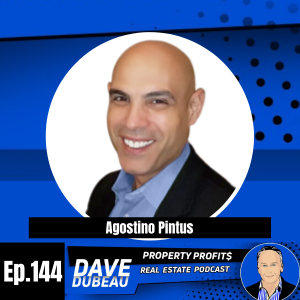
Agostino Pintus is a multi-family investor, syndicator, and entrepreneur with more than 15 years of experience in real estate. He currently oversees strategic partnerships, capital development, and platform development for Realty Dynamics Equity Partners, an investment firm specializing in multi-family acquisition and asset management services.
In this episode, Agostino talks about development deals and how he considers it the ‘next-level step’ though it is a riskier but more lucrative real estate investment. He also shares, how after spending time with multi-family properties, he is into one of his most significant development projects of converting more than a 100-year old The Rockefeller Building from an office building to a multi-family property.
Resources:
bulletproofcashflow.com
Topics Covered:
01:10 – Agostino’s transition from multi-family homes to development deals
03:59 – Is there a difference between a development deal from a redevelopment deal
08:09 – Taking an overview of how a development deal works with The Rockefeller Building
10:27 – How the parking lot would be like for the redevelopment of The Rockefeller Building
12:10 – The turnaround time for The Rockefeller building redevelopment
Key Takeaways:
“There is so much more aside from doing multifamily syndications. And another big aspect and I consider this as the next level stuff. Next level stuff is doing development.” – Agostino Pintus
“What you’re going to find with these development type projects is that they are far more lucrative and a little riskier.” – Agostino Pintus
Connect with Agostino Pintus:
bulletproofcashflow.com
LinkedIn
Facebook
Twitter
Instagram
Connect with Dave Dubeau:
Property Profits Podcast
www.davedubeau.com
www.investorattractiondemo.com
Facebook
LinkedIn
Enjoyed the Podcast?
Please subscribe on iTunes for updates

Friday Nov 20, 2020
Friday Nov 20, 2020
What you’ll learn in just 17 minutes from today’s episode:
Learn how financial planning skills help you make sound real estate business decisions
Find out why a financial planner’s compensation looks small in rates and yet adds up hugely
Discover how you can make use of your tax-free savings account with investments other than real estate
Resources/Links:
meganchomut.com
Summary:
Meghan Chomut is a Financial Planner that works with families and investment property owners to make smart financial decisions. From debt repayment strategies to savings (how much + where), to tax planning and everything in between. She loves helping families get their finances organized, streamlined, and set up properly so they can actually SEE financial freedom (or be ready should an opportunity come up!).
In this episode, Meghan talks about her transition from a financial planner to a real estate investor, how her financial planning skills help in her real estate business, and when it comes to financial planner’s compensation rates, she shows you how it can add up.
Topics Covered:
02:37 – What was her journey like – starting as a financial planner to becoming a real estate investor
07:42 – Owning her own financial planning company
08:50 – How do financial planners get compensated
13:09 – Utilizing tax-free savings account as an additional investment other than a real estate portfolio
14:21 – Her thoughts on self-directed RSP accounts, and self-directed TFSA accounts
Key Takeaways:
“Index investing is really big right now. So, it’s just picking the account that services you best, and for real estate investors, I do think I would lean more towards tax-free savings accounts as opposed to RSP’s because there are some strategies with using RSP should you sell your rental property and trying to reduce the taxes there. But I do see that tax-free savings accounts are really underused and that misunderstanding that literally anything can go in them.” – Megan Chomut
“I personally use self-directed RSP, but it’s kind of on your preference and your comfort level. So maybe starting without one and then as you get more and more familiar with how it all works, moving over to one isn’t a big deal.” – Megan Chomut
Connect with Megan Chomut:
Meganchomut.com
Instagram
Facebook
Connect with Dave Dubeau:
Property Profits Podcast
www.davedubeau.com
www.investorattractiondemo.com
Facebook
LinkedIn
Enjoyed the Podcast?
Please subscribe on iTunes for updates
Tuesday Nov 17, 2020
Tuesday Nov 17, 2020
What you’ll learn in just 17 minutes from today’s episode:
Find out how to grow your portfolio even with no money of your own and no joint venture partners
Learn how to scale up your real estate in a short amount of time
Find out about the analogy of the iceberg and how to get massive growth in real estate
Resources/Links:
elevationrealty.ca
Summary:
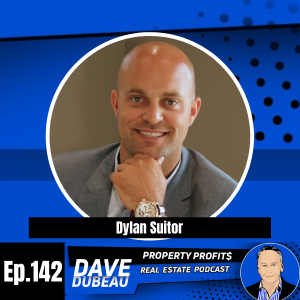
Dylan Suitor has been a real estate agent for 4 years and an investor for 12. He reached massive growth in the past 24 months adding nearly 250 doors to his portfolio without any of his own money nor joint venture partners.
In this episode, Dylan talks about his strategies in growing his portfolio without using any of his own money nor having to raise capital from joint venture partners.
Topics Covered:
01:08 – What number of doors does he have in his portfolio in the last two years
01:57 – How he scaled up so fast in his real estate business
03:06 – Is he a realtor first or a real estate investor first
04:06 – How he built up his portfolio without money of his own and joint venture partners to depend on
07:07 – Typical price point for the type of properties he is buying
10:30 – Talking about private money lenders, first mortgage rate, blended mortgage rate
11:48 – Turnaround time for his properties
14:32 – Is he running his own construction firm or still subcontracting
15:50 – What’s his biggest goal this year
Key Takeaways:
“I went on my own and committed to education for about three years before I started really going big on real estate investing and learned a ton and connected with the right people. And here we are a couple of years later and a few hundred doors later.” – Dylan Suitor
“When you see that short period of time and that large scaling, I just get tired of learning, instead, it’s time to apply. And I found the people I wanted to be in business with and I got to attribute a lot of my success to one of my biggest business partner Robbie, and just really taking something that he had been developing for a few years prior and just blowing it up.” – Dylan Suitor
“The piece that has made us, that allowed us to scale as quickly is making sure that instead of having a money partner that maybe their goal is, 10 million in holdings or 5 million holdings or three properties and then having to find more and more money partners go down the same learning and growth piece, I find one person that I get to grow with through the whole process. And that’s really allowed us to continue to grow at such a large pace.” – Dylan Suitor
Connect with Dylan Suitor:
elevationrealty.ca
LinkedIn
Facebook
Instagram
Connect with Dave Dubeau:
Property Profits Podcast
www.davedubeau.com
www.investorattractiondemo.com
Facebook
LinkedIn
Enjoyed the Podcast?
Please subscribe on iTunes for updates

Friday Nov 13, 2020
Friday Nov 13, 2020
What you’ll learn in just 17 minutes from today’s episode:
Learn what a Profit First System is and how it protects you against yourself
Find out how to build systems in your real estate that truly build wealth
Learn how to tell your dollar where to go so that you can manage your cash flows and always be profitable
Resources/Links:
Richer Soul Podcast: http://richersoul.com/
Profit Answer Man Podcast: https://profitanswerman.libsyn.com/
Profit First: Transform Your Business from a Cash-Eating Monster to a Money-Making Machine by Mike Michalowicz
Summary:
Rocky Lalvani used the Profit First model in his real estate business. He owns rental units and flips houses in Harrisburg, PA. Rocky’s main goal is to help other real estate investors ensure they are always profitable. In this episode, Rocky shares how he uses the Profit First System, and the equation of Sales – Profit = Expenses, where profit is truly accounted for, and bills are paid every time.
Topics Covered:
01:12 – Why profit first
02:55 – The thing with portfolio envy
03:34 – Being the spreadsheet geek that he is
04:38 – What properties did he start with and the deals he’s into now
06:36 – Creating systems that build wealth
08:38 – The need to have a team
12:54 – The need for cash flow management system
13:26 – How do we protect against ourselves
Key Takeaways:
“We can make it work; we can figure out a way we kind of go in the opposite way. We want our deals to be so robust with so much extra room, that when things go wrong, and they usually always do that there is room to handle the mistakes.” – Rocky Lalvani
“If you’re not cash flowing properly, you may not be profitable.” – Rocky Lalvani
“Once I saw the system from Mike and I learned that most business owners weren’t looking at their financial statements, and they couldn’t understand them, I was like, there’s the goldmine for me, this is where I belong. And so that’s where that grouping came together with him.” – Rocky Lalvani
“You’re not going to buy that house and flip it without putting a lot more money into it than you said you had to. And that’s the reality of it.” – Rocky Lalvani
“With the profit first system, you tell your dollars where to go.” – Rocky Lalvani
“We got to get a deal. You are better off waiting and finding the right opportunity than rushing out because I’m sure you’ve heard it a million times. Where’s the money made in real estate? On the purchase.” – Rocky Lalvani
Connect with Rocky Lalvani:
profitcomesfirst.com
LinkedIn
Facebook
Twitter
Connect with Dave Dubeau:
Property Profits Podcast
www.davedubeau.com
www.investorattractiondemo.com
Facebook
LinkedIn
Enjoyed the Podcast?
Please subscribe on iTunes for updates

Tuesday Nov 10, 2020
Tuesday Nov 10, 2020
What you’ll learn in just 17 minutes from today’s episode:
Learn how to reach out, confront, and make your fears disappear to be effective as a real estate investor
Learn to overcome the 7 roadblocks to asking questions to become a bold asker
Find out the three channels through which to ask to have a reflective journey
Resources/Links:
Join the ASK – the book club for FREE. Click here: http://askthebookclub.com/
Summary:
Mark Victor Hansen is a Worldwide Best-Selling Author, America’s Ambassador of Possibility, Speaker, Philanthropist, and Humanitarian.
Crystal Dwyer Hansen is an international speaker, researcher, corporate consultant, author, and entrepreneur. Her expertise is in the field of human potential. Through her years spent as a Transformational Life Coach, and Wellness/Nutrition Expert, she has seen people experience profound and lasting transformation in relationships, career, health & wellness, by tapping into their own inner resources. Having personally guided people from seemingly impossible states of depression, anxiety, and hopelessness—to triumph, freedom, and happiness, is what drives Crystal’s conviction that all people have unlimited potential for greatness if they only understand how to access those resources.
In this episode, Mark and Crystal zero in on the importance of asking questions. When you ask the right questions, you will be able to draw out their pain points, and what they want to be done, thus, helping you serve your clients better. A person who asks questions is perceived to be likable and likely to be the one who gets the best deal every time.
Topics Covered:
01:52 – Raving about the power of asking
03:19 – How does the skill of asking the right questions applicable to real estate investors
08:37 – The roadblocks to asking questions
11:03 – The need for self-awareness to crush those fears
15:01 – What tiny steps you can do to overcome your fear of asking questions
15:23 – Reach out, confront, and make your fear disappear
Key Takeaways:
“If you really want to create a bond with your clients, you need to use the art and science of asking by figuring out who they are and what they want.” – Crystal Hansen
“A lot of us never really take the time to ask questions. And they’re so important because that’s the architecture for your future, people allow themselves to just so randomly wake up and live their life without sculpting.” – Crystal Hansen
“Sometimes we just need to learn to kind of step on our fear, get that awareness of, of what the reality is, it’s like people aren’t ready to reject you.” – Crystal Hansen
“One study done by Harvard is that people who ask more questions are perceived to be more likable, that is both in business relationships and personal romantic relationships.” – Crystal Hansen
“Get to know what drives Because if you don’t take the time to ask people questions, you’ll never understand how to serve them.” – Crystal Hansen
“We’ve been very blessed to travel to 80 countries around the world, met great people that are nice, wonderful, well- educated, talented, sophisticated. But the difference between those who succeed a little, and those who succeed a lot, we discovered as one thing and one only, and that is to have the ability to ask, which we now call becoming a master asker.” – Mark Victor Hansen
“The sense of unworthiness, all of us have to overcome it.” – Mark Victor Hansen
“In order to overcome shyness, what they need to do is, first of all, interrogate themselves and ask themselves questions, and then find somebody to bond with, somebody to practice with.” – Mark Victor Hansen
Connect with Mark Victor:
marcvictorhansen.com
LinkedIn
Facebook
Twitter
Instagram
Connect with Crystal Hansen:
LinkedIn
Connect with Dave Dubeau:
Property Profits Podcast
www.davedubeau.com
www.investorattractiondemo.com
Facebook
LinkedIn
Enjoyed the Podcast?
Please subscribe on iTunes for updates
Friday Nov 06, 2020
Friday Nov 06, 2020
What you’ll learn in just 17 minutes from today’s episode:
Find out about the strategy Daniel devised to get started and buy his first deal
Learn how he grew his portfolio in a very short amount of time
Learn about the mindset of a true investor and entrepreneur
Resources/Links:
Get a FREE copy of Daniel Kwak’s book: 0 to 75 Units in 1 Year. Click here: https://0to75units.com/book-order
Summary:
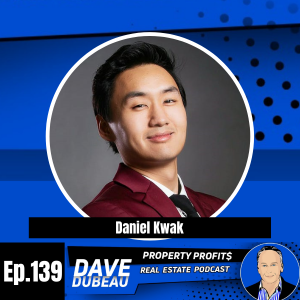
Daniel Kwak immigrated to the USA at the age of 5. He had a negative $187.65 in bank account at the age of 19 and had 87 doors by the age of 23.
In this episode, Daniel shares how he started poor and with his big dreams of owning an NBA team, pushing him to seek an opportunity outside of a nine to five job. He found it in real estate – which he believes is the ticket to his dream. At the moment he is busy growing his portfolio, which he actually grew big in so short a time, after buying his first deal. He talks about strategies on how to raise capital and the mindset you need to make it big in real estate.
Topics Covered:
01:03 – A backstory of his childhood background
02:23 – What got him started in real estate
04:20 – What was his first deal when he started and what did it progress to
06:18 – How he syndicated funds to start buying his first deal
07:46 – A sibling real estate partnership
08:24 – Why should you first find what your value propositions are
10:04 – How he grew big quickly his portfolio right after his first deal
11:54 – How he transitioned from single-family to multi-family homes
13:25 – How does his portfolio look like now
Key Takeaways:
“Real estate investing is a very viable and phenomenal way of building wealth.” – Daniel Kwak
“Right now, I’m more focused on recruiting potential passive investors. Because I think there’s a lot of things up in the air right now. And I don’t think it’s a great time to buy. Others may see it from a different standpoint, but just based on my opinion, and the research I’m doing and the people I’ve talked to, I don’t think it’s a great time.” – Daniel Kwak
“For the short term for us, it’s organizing and raising capital, focusing on education. And in about six months, we’re looking to be a little bit more aggressive with purchasing multifamily.” – Daniel Kwak
“I’d recommend a lot of people take that route. It’s a very unpopular route. I spent three years shadowing people, learning, buying every single possible course I could on real estate, reading as many books and podcasts and it paid off for me. That first deal was a portfolio, four single-family houses.” – Daniel Kwak
“I found a very interesting way to create win-win scenarios where individuals would invest in deals that I would find through other individuals. And I would pretty much syndicate the funds and do put a lot of the sweat equity.” – Daniel Kwak
“I always recommend finding out what your value propositions are. And what a value proposition is, the two to three things that you do very, very well. You can write down, sit down, and have a list of three, five things, maybe even nine to 10 things that they enjoy doing that they’re good at. And they can formulate their blueprint on how to scale their portfolio around that.” – Daniel Kwak
Connect with Daniel Kwak:
thekwakbrothers.com
Facebook
YouTube
Connect with Dave Dubeau:
Property Profits Podcast
www.davedubeau.com
www.investorattractiondemo.com
Facebook
LinkedIn
Enjoyed the Podcast?
Please subscribe on iTunes for updates
Tuesday Nov 03, 2020
Tuesday Nov 03, 2020
What you’ll learn in just 17 minutes from today’s episode:
Learn about the pitfalls of having a funding source as a bank
Find out about the advantages of financing options via private lenders over banking institutions
Find out the mistakes to avoid when using private money lenders
Resources/Links:
Get your FREE 7 Steps to Guaranteed Hard Money Loan Approval. Click here: https://hardmoneybankers.com/
Summary:
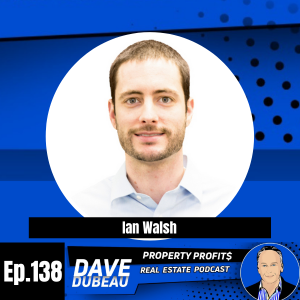
Ian Walsh is a partner at Hard Money Bankers PA. As a managing partner, he is always looking to lend money to investors in the Eastern Pennsylvania and Southern New Jersey market. Lending is a passion and being creative to make the loan work for the borrower is always exciting. It does not matter if it is a construction and acquisition loan, a construction loan or a refinance, he always tries to find a way to make it work. In this episode, Ian shares how hard money lenders or private money lenders, provide fast and flexible lending solutions to real estate investors; approving loans in as fast as 24 hours.
Topics Covered:
00:44 – What investment strategy he started with
02:07 – Hard money lending and different financing options available for real estate investors
03:28 – How does a private money lender differ from a bank
06:21 – Hard money lender versus private money lenders
10:23 – How were they able to raise $40 million dollars to loan out
12:00 – Mistakes real estate investors commit when they go to private money lenders
Key Takeaways:
“Private and hard money is getting to be a lot more flexible, we’re about speed. We’re about analysis, quick analysis on the property first. And that’s closing in 24 hours.” – Ian Walsh
“Bankers are not investors first by nature, which means they’re underwriting you rather than your deal. They’re not really fit for our space because my space is built on investment properties, I have to underwrite the property first and then borrow and when you do that in reverse you miss the essence of what private lending and hard money lending is and you run into trouble.” – Ian Walsh
“If you’re calling a private lender, know your numbers. Even if you’re new, which is fine. When they come in, research and understand their values, they understand what a house is truly worth on the back end.” – Ian Walsh
Connect with Ian Walsh:
hardmoneybankers.com
LinkedIn
Facebook
Twitter
Instagram
Connect with Dave Dubeau:
Property Profits Podcast
www.davedubeau.com
www.investorattractiondemo.com
Facebook
LinkedIn
Enjoyed the Podcast?
Please subscribe on iTunes for updates
Friday Oct 30, 2020
Friday Oct 30, 2020
What you’ll learn in just 17 minutes from today’s episode:
Find out how to rake in not only cash flow but build real wealth from your properties
Learn how to weather-proof your real estate business in any economic turn of events
Find out Sensei’s learning experiences in real estate that you can learn from to avoid making the same mistakes in your real estate
Resources/Links:
For a FREE consultation about your ROI Calculator click here and send us an email: https://blackbeltinvestors.com/contact/
Summary:
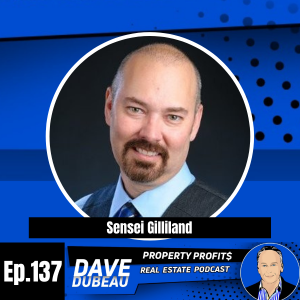
Sensei Gilliland of SoCal is the founder of Black Belt Investors. In 1995, he began his investing endeavors. Since that time, Sensei has created cash through wholesale real estate, obtained wealth through rental properties, and continues to teach his methods through educational events helping people to achieve their financial dreams.
In this episode, Sensei talks about the three arms of his real estate business focusing on education, consulting, and investing. Where learning experiences are concerned, one thing he emphasizes is the need to be ready to adapt to changing markets as this is the key to your business continuity. He shares investment strategies that has him not only getting a steady stream of cash flows from but also truly is providing wealth for him and his investors.
Topics Covered:
01:30 – From martial arts to real estate – the birth of Blackbelt Investors
03:38 – How delegation let him juggle between his many businesses
05:25 – The three arms of his real estate business
06:06 – What his primary bread and butter is
09:40 – What kind of properties does he buy and hold
10:46 – How does his service ‘Remote Rehab’ work
12:38 – Learning lessons from his real estate journey
17:25 – The two ways he’s building his rental portfolio
Key Takeaways:
“I figured out this one thing, and that is, real estate controls all businesses.” – Sensei Gilliland
“When you’re a fix and flipper, you abide by a certain type of criteria, number one is affordability.” – Sensei Gilliland
“I was all about buy and sell, but there’s a point, you can’t be wealthy buying and selling property.” – Sensei Gilliland
“I’m not your commercial investor, I’m residential, strictly residential. By far, it’s like playing Monopoly. If you guys have ever played, you buy cheap properties, the cheap properties that make dollar sense with a good exit strategy, and those are typically houses.” – Sensei Gilliland
“Most of our investors buy houses because they’re easy stepping stones, and also offer the best exit strategies.” – Sensei Gilliland
“I don’t invest in areas just for cash flow, I can find that anywhere, I can find cheap properties that cash flow anywhere, for me and for my clients, I want to make sure that we get the most bang for our buck. And so, I seek out undervalued markets that have the potential to grow.” – Sensei Gilliland
“When you put the ingredients of cash flow, appreciation, tax benefits, that’s the combination needed to build wealth.” – Sensei Gilliland
“I found that many made the mistake not knowing how to adapt to the market. And for me, that was a learning lesson.” – Sensei Gilliland
“My business tanked because I wasn’t ready to adapt to changing markets. You don’t need to be a master in one niche. I say master one niche and when you’ve mastered it, add on another master’s degree in that real estate niche, because you don’t want to be a jack of all trades and a master of none.” – Sensei Gilliland
Connect with Sensei Gilliland:
www.blackbeltinvestors.com
Facebook
Twitter
Instagram
YouTube
LinkedIn
Connect with Dave Dubeau:
Property Profits Podcast
www.davedubeau.com
www.investorattractiondemo.com
Facebook
LinkedIn
Enjoyed the Podcast?
Please subscribe on iTunes for updates