Listen on:









Episodes

Thursday Feb 03, 2022
Thursday Feb 03, 2022
Jim Pfeifer is one of the founders of Left Field Investors and the host of the Passive Investing from Left Field podcast. Left Field Investors is a group dedicated to educating and assisting like-minded investors to negotiate the nuances of the passive investing landscape and world of syndications. Jim is a former financial advisor who became frustrated with the one-path-fits-all approach of the standard financial services industry. Now, he concentrates on investing in real assets that produce cash flow and is committed to sharing his knowledge with others who are interested in learning a different way to grow wealth. Jim not only advises and helps people get started in passive real estate syndications; he also invests alongside them in small groups to allow for diversification among multiple investments and syndication sponsors. Jim believes the most important factor in successful syndication is finding a sponsor that he knows, likes, and trusts. He has invested in over 45 passive syndications including apartments, mobile homes, self-storage, private lending and notes, ATMs, commercial and industrial triple net leases, assisted living facilities, and international coffee farms and cacao producers. In this episode, Jim shares stories about mistakes in investing, his experience with troublesome investors, and why those practices should be avoided in the investors’ world.
Checkout: Raising Capital Without Rejection Full-Day Workshop (Online): https://investorattractionworkshop.com/
What you'll learn in just 17 minutes from today's episode:
Understand why good and constant communication plays a huge role in having deals;
Discover the major turn-offs that usually causes failed partnerships around a deal; and
Find out how you can effectively communicate with your investor partner especially now that we’re all in the midst of a pandemic.
Resources/Links:
Website: http://www.leftfieldinvestors.com/
Topics Covered:
02:30 - Communication as the key towards a smooth and successful partnership
05:10 - Jim’s varying relationship with different investors and his way of testing a new sponsor
07:15 - Things that have turned Jim off of deals
09:47 - Accountability issues along with the excuses he usually hears from sponsors
12:37 - Jim’s deal experiences concerning K-1s this year
14:43 - Why is it important to communicate and do distributions the right way
16:48 - The kind of communication Jim hopes for from a deal maker
18:54 - Jim’s background around investing in smaller types of deals
20:07 - What is Jim’s recommendation for small operators?
22:10 - The story behind the name “Left Field Investors”
Key Takeaways:
“Communication is the key.” – Jim Pfeifer “I’m okay with bad news. This is a risky business. I understand that everything isn’t going to go exactly to perform on. But if you promise something, you either need to deliver it or you need to explain why you didn’t.” – Jim Pfeifer “You can’t hide behind something. You just have to be honest. If you’re not going to be honest, and accept responsibility for your mistakes or the deals that aren’t working out as well, then I’m not going to give you credit if a deal goes great. Because if you’re not willing to take responsibility for the bad deals, you don’t get credit for the good ones. That’s all luck. I’m not investing with you.” – Jim Pfeifer “There’s no other product that you’re sending me other than distributions and communication, and the distribution is communication also. If you don’t get that right, then what are you doing? You’re not gonna get my money a second time.” – Jim Pfeifer
Connect with Jim Pfeifer:
Email: jim@leftfieldinvestors.com
Website: http://www.leftfieldinvestors.com/
Podcast: https://leftfieldinvestors.com/podcast/
Connect with Dave Dubeau:
Podcast: http://www.propertyprofitspodcast.com/
Website: https://davedubeau.com/home
Investor Attraction Workshop: http://www.investorattractionworkshop.com/
Facebook: https://www.facebook.com/thedavedubeau
LinkedIn: http://linkedin.com/in/davedubeau
Enjoyed the Podcast?
Please subscribe on iTunes for updates

Monday Jan 31, 2022
Monday Jan 31, 2022
Bill Gross is a broker associate with EXP Realty, specializing in probate and legal estate. He is a Certified Probate Expert and can be found at the Stanley Mosk courthouse daily to work with attorneys, clients, petitioners, investors, and other real estate professionals to help them solve their real estate problems.
In this episode, Bill walks us through the process of going over probate deals, the people to work with to help you carry things out, and the opportunities that come when you focus on this niche.
Checkout: Raising Capital Without Rejection Full-Day Workshop (Online): https://investorattractionworkshop.com/
What you'll learn in just 17 minutes from today's episode:
Find out what are probate deals and how to go about them
Discover the opportunities available for you as a real estate investor to be dealing with probate properties
Learn about who to work with that will greatly help in carrying out the process of going through these properties
Resources/Links:
Website: http://billgross.exprealty.com/
Topics Covered:
01:09 - What is probate, probate properties, opportunities, and what you need to pay attention to
02:14 - What is this tool called 'Living Trust'
03:42 - The biggest misconception about probate
04:51 - The opportunities available in probate properties for real estate investors and how to go about it
09:43 - What exactly does he do as a probate property expert realtor and investor, who he works with and how he goes about working with them
12:12 - How to have a great advantage in focusing on this kind of niche
13:06 - People who are most likely to do well in this niche
14:08 - What you can do if you don't directly get involved in this niche
Key Takeaways:
"The biggest misconception of probate is people think, well, if I have a will I avoid probate, not true. The state will use your will to determine how the probate court divvy up your assets after taking off all the fees and attorneys and all that." - Bill Gross
"But it might be easier just to find somebody in your county who really knows those rules and knows the law [probate]. Because, you know, I find that finding deals sometimes is overcoming the obstacles that the competition left." - Bill Gross
"I have three clients I would say, your estates which have a property to sell who need somebody to sell the property and also needs me to help them find the right path legally." - Bill Gross
"I think focusing on anything is an advantage. And I try to look for places where there are synergies. I work with estates and attorneys, sellers, and agents because each one makes you better working with the other ones."
"And I'd say the same as an investor, the reason why you're going to probate, I enjoy it. I think you have to enjoy what you do. When you enjoy something, and you do it consistently, you start to learn, and that learning becomes an asset to your business." - Bill Gross
"If you're not going to be it, then I think real estate is all about partnering with other people. Find someone who knows that business, search the MLS listings for probates, and see who's the listing agent that consistently has more, and you invite them for coffee or lunch or pick their brain and find out how they can work with you. Do they have listings they can show you and seek to work with them if you have a deal in particular." - Bill Gross
Connect with Bill Gross:
Website: http://billgross.exprealty.com/
Connect with Dave Dubeau:
Podcast: http://www.propertyprofitspodcast.com/
Website: https://davedubeau.com/home
Investor Attraction Workshop: http://www.investorattractionworkshop.com/
Facebook: https://www.facebook.com/thedavedubeau
LinkedIn: http://linkedin.com/in/davedubeau
Enjoyed the Podcast?
Please subscribe on iTunes for updates
Thursday Jan 27, 2022
Thursday Jan 27, 2022
Matthew Lee is the founder and managing founder realtor at Volition Properties. He is a thought leader and advocate who are passionate about the transformative change that real estate investing offers when done correctly. Having learned hard lessons from previously "chasing the shiny object" when investing in small towns, he has now created the Volition investing business model (an investment business model that actually works in the Toronto market) predicated on risk-mitigation, scalability, and resiliency, which he has taught to thousands of aspiring investors.
Ming Lim is the head of the construction broker at Volition Properties and a passionate educator. He brings 20 years of real estate investment experience in Toronto, the GTA, and Southwest Ontario to the Volition team. He loves nothing more than to teach, mentor, and advise. His background in Computer Science from the University of Waterloo and construction experience give him a unique analytical lens on investing and a practical approach to implementing investing strategies.
Are you interested in investing in the Greater Toronto Area?
Do you like investing in high-priced markets?
Join Matthew and Ming in this episode as they share with us the massive benefits of investing in high-cost markets. They talk about the different investment classes you can build your portfolio on and how to scale further to more sophisticated ones. They also include numbers and analysis of the different investment classes and how you earn more and lessen the time it takes to make profits.
And they are not at all theoretical, for what they present is all based on their experiences doing it themselves. Besides, they have more sustainable strategies, risk-mitigated, a better tenant profile, and cash-flowing properties approach.
Checkout: Raising Capital Without Rejection Full-Day Workshop (Online): https://investorattractionworkshop.com/
What you'll learn in just 17 minutes from today's episode:
Find out what basic assets you can buy inexpensive markets that are considered a building block to creating your portfolio and scale higher to more sophisticated properties
Discover how you can employ this strategy when investing in crazy expensive markets to maximize your return and minimize the length of time to scale higher
Learn how you can do better even with limited cash flow in these expensive markets
Resources/Links:
Website: https://www.volitionprop.com
Topics Covered:
01:39 - What is Volition Properties and what do they do
03:48 - The core of their business and the work that Volition Properties do and how they go about it
05:54 - Why and how to invest in crazy expensive markets: the five key questions to ask when deciding to invest in Toronto
09:43 - Taking a look at the home price index to determine where the major economic growth is happening
13:18 - Understanding why there is continued in the Toronto market despite the pandemic
14:48 - Who are they [Volition Properties] targeting: uncovering their tenant profile
19:18 - How to bypass heavily tenant-favored law in Toronto
21:29 - Who are the buyers and where are they buying in Toronto
23:09 - Type of asset you want to buy especially if you're not a sophisticated investor
24:19 - The single most desirable feature to determine where to buy
25:57 - Best places to invest in Toronto
27:30 - Looking at investing beyond the financials and the return: 4 types of risk with an acronym of TIME
33:28 - The role of cash flow and when does it matter
37:39 - Employing the power of the multiplier effect in Toronto properties
42:48 - The bigger and better deals you can buy in Toronto that will have you cash flowing at the same time increase the value of property
49:14 - Transit analysis on turnkey properties
50:21 - More numbers and analysis on successful deals they have done in the past
51:19 - Doing better with limited cash flow
01:00:24 - People think they're investing, but they're actually gamblingyou
Key Takeaways:
"When you were seeing Toronto average prices, it was really a tale of two cities where you're seeing downtown continue to grow and expand in price, but uptown, not growing at nearly the same sort of rate. That's why it's really important not just to be an expert in whatever city you're investing in, but an expert within the neighborhoods within that city." - Ming Lim
"A lot of times people are looking at the property, and then figuring out the tenant. And that's the wrong way to do it. As a business, you don't design the product and then figure out who you're going to sell it to. You're trying to figure out what your customer is? What do they need? And how can you fill that before you go and create a product and investing is no different." - Ming Lim
"The idea here is, in a higher growth market, crazy expensive market, let's call it you have the opportunity to buy a property, at10% growth, you only need to wait about two and a half years before you've built enough equity in that property through appreciation and mortgage pay down to refinance, do an equity ticket and go buy another life property." - Ming Lim
"How do you get those higher rents, and this is where you start hearing about things like renovictions, these big tenant advocacy groups start getting involved. We bypass all of that by just focusing on an inherently transient tenant profile right from the get-go." - Matthew Lee "Transit is the single most desirable feature to help you determine where to buy." - Matthew Lee
"When you're thinking about where and what to buy, we need to start thinking about expanding our criteria and broadening our thinking a little bit in terms of what is it that our renters want." - Matthew Lee
Connect with Matthew Lee and Ming Lim:
Website: https://www.volitionprop.com
Connect with Dave Dubeau:
Podcast: http://www.propertyprofitspodcast.com/
Website: https://davedubeau.com/home
Investor Attraction Workshop: http://www.investorattractionworkshop.com/
Facebook: https://www.facebook.com/thedavedubeau
LinkedIn: http://linkedin.com/in/davedubeau
Enjoyed the Podcast?
Please subscribe on iTunes for updates
Monday Jan 24, 2022
Monday Jan 24, 2022
Greg Scully is a former small business owner with his wife and business partner, Kim. He also retired after a 20-year career with Frito-Lay. They have been investing in real estate since 2016. Currently, their portfolio consists of an ownership interest in over 150 units in Tennessee and Indiana with a market value of $4,200,000. They have also participated in a land development project in South Carolina. He has recently partnered to scale both the flipping and multifamily investment opportunities in central and eastern Tennessee.
In this episode, Greg shares the foundational elements of a joint venture and syndication and how to go about raising capital to fund these partnerships.
Checkout: Raising Capital Without Rejection Full-Day Workshop (Online): https://investorattractionworkshop.com/
What you'll learn in just 17 minutes from today's episode:
Find out how to go about joint venture partnerships and syndications, the costs involved, and where to get capital investors
Discover strategies on how to tighten your network base for joint venture and syndication partners
Learn about one tool he uses to build that know-like-trust factor in nurturing relationships for your network base
Resources/Links:
Website: https://realwealth.solutions/
Topics Covered:
00:53 - What is his top investment strategy
01:35 - Number of flips he does in a year
02:07 - Multifamily size he's looking into these days
03:03 - Differentiating joint ventures from syndication
03:51 - The size of properties he brings on JV partners or scales it up to syndication
05:04 - Ideal number of JV partners for joint partnership
05:40 - Costs involved when dealing with syndications
08:17 - How to go about syndication and where to find capital partners
09:41 - Finding active and passive investors among their network base
10:26 - Minimum amount he requires from syndication partners at the time he started syndicating
12:24 - How has his podcast benefitted him and his real estate investing business
Key Takeaways:
"I am of the mind that fewer is better [number of JV partners]. If you can keep it under six; that would be my sweet spot." - Greg Scully
"We came up with education platforms; we often come along with a pretty tight network. So that is largely where our initial investor base came from, which is the relationships. We paid for education to ramp up and accelerate our growth in this business." - Greg Scully
"It's just been a great avenue [having a podcast]. I like these longer conversations instead of popping in and out of social media. This lends a lot more to my personality. It's a great way for people to get to know you. You can just get much more granular with questions, and things are this way or that way. And through those kinds of conversations, you can build trust with each other. People will work with you in business when they like, know, and trust you." - Greg Scully
Connect with Greg Scully:
Website: https://realwealth.solutions/
LinkedIn: https://www.linkedin.com/in/gregjscully/
Connect with Dave Dubeau:
Podcast: http://www.propertyprofitspodcast.com/
Website: https://davedubeau.com/home
Investor Attraction Workshop: http://www.investorattractionworkshop.com/
Facebook: https://www.facebook.com/thedavedubeau
LinkedIn: http://linkedin.com/in/davedubeau
Enjoyed the Podcast?
Please subscribe on iTunes for updates
Thursday Jan 20, 2022
Thursday Jan 20, 2022
Kirby Atwell graduated from West Point and served 11 years as an officer in the US Army. He landed on the vacation rental strategy after doing over 100 flips and lots of long-term rentals. And now, he has achieved financial freedom with his small vacation rental portfolio and loves helping others do the same!
In this episode, Kirby shares how he generates the same amount of cash flows by owning just a small number of short-term rental properties compared to 26 properties. Not to mention the less headache that comes with tenant issues.
Checkout: Raising Capital Without Rejection Full-Day Workshop (Online): https://investorattractionworkshop.com/
What you'll learn in just 17 minutes from today's episode:
Find an investment portfolio that earns high cash flow but doesn't have tenant issues to deal with
Learn how a fewer number of properties generates high cash flow
Discover how his investment portfolio performed well even amidst COVID
Resources/Links:
Join a webinar to get to your financial freedom. Click here: https://www.livingoffrentals.com/course
Topics Covered:
01:20 - Military man to real estate guy
02:50 - What he started out within his investment portfolio and what he transitioned into
05:25 - How he quickly replaced income transitioning from flipping to having rental properties
06:42 - What are voucher tenants
08:30 - The cash flow from his short-term rentals
10:11 - How his properties are doing despite COVID
12:28 - What for him is a good number of properties to have to replace a day job income
14:51 - Talking about a webinar that's coming up
Key Takeaways:
"I'm not in any better financial situation than I was when I started because we spent millions of dollars on marketing and personnel and office and project managers and all the stuff that comes with growing a flipping company, so I had no assets to show for it. And that's really when I transitioned into rentals and realized there are a lot better ways to build wealth in real estate." - Kirby Atwell
"Once I accumulated 26, there were a lot of issues that came, a lot of challenges around keeping the properties in great shape and the challenges that come with that causing somebody to become homeless. Even though the cash flowed well, it was very unreliable. And that's when I started looking at other options that still had high cash flow, and I could do that BRRRR, but strategy but didn't have all these issues. And that's when I transitioned into vacation rentals a few years ago." - Kirby Atwell
"It's a much more automated process [vacation rental properties]. The property stays in tip-top condition, they're cleaned a couple of times a week by our cleaners. So, it's just a model that's much better, in my opinion." - Kirby Atwell
Connect with Kirby Atwell:
Website: https://www.livingoffrentals.com/
Facebook: https://www.facebook.com/groups/LivingOffRentals
Connect with Dave Dubeau:
Podcast: http://www.propertyprofitspodcast.com/
Website: https://davedubeau.com/home
Investor Attraction Workshop: http://www.investorattractionworkshop.com/
Facebook: https://www.facebook.com/thedavedubeau
LinkedIn: http://linkedin.com/in/davedubeau
Enjoyed the Podcast?
Please subscribe on iTunes for updates
Monday Jan 17, 2022
Monday Jan 17, 2022
Chris Miles is the Anti-Financial Advisor. He teaches entrepreneurs and professionals how to get their money working for them TODAY! He's an author, podcast host of The Chris Miles Money Show, has been featured in US News, CNN Money, Entrepreneur on Fire, and has a proven reputation with his company, Money Ripples, getting his clients' fast financial results. In fact, in the last 11 years, his clients have increased their cash flow by over $250Million.
In this episode, Chris tells us what important matters your financial advisor is not telling you about when using money from your insurance policy. And he shares how you can actually use it to invest in real estate and earn more.
Checkout: Raising Capital Without Rejection Full-Day Workshop (Online): https://investorattractionworkshop.com/
What you'll learn in just 17 minutes from today's episode:
Discover an investment strategy where you make your money earn twice at the same time
Find out a way to help you retire comfortably ten years from now
Learn and understand what infinite banking is and how to maximize your return using money from your insurance policy
Resources/Links:
Website: http://www.moneyripples.com/
Topics Covered:
01:39 - The reason he quit being a financial advisor
07:30 - What you want to know about infinite banking
09:51 - Understanding the whole life insurance policy and how you can use them to invest in real estate
11:17 - How you can borrow from your insurance policy to invest in real estate
15:14 - Helping people now with their finances but the non-traditional way
16:56 - Accomplishing to retire ten years from now or in your 50's
17:26 - Talking about the 4% rule
18:00 - What key thing mutual funds are missing and why real estate is still way better than all of the others
Key Takeaways:
"If you use life insurance to fund real estate, you'll add at least another 2,3,4 percent a year on top of your 10% return, versus using a savings account, use that, the money's gone because once you pull it out, it's gone. So it's a way actually to make money in two places at the same time. You kind of have your cake and eat it, too." - Chris Miles
"It's all about cash flow. That's the big key thing that mutual funds are missing because it's always about how do I not run out of money? But when you're investing for cash flow, that's the thing that blew my mind after I quit being a financial advisor because then everything became hopeful." - Chris Miles
"If you save, it might take you 10 years, just saving. But if we start buying real estate along the way, and that gives you other things, tax benefits, they're even like appreciation potential plus the cash on cash returns, you'll probably do that within about seven years." - Chris Miles
Connect with Chris Miles:
Website: http://www.moneyripples.com/
Facebook: https://www.facebook.com/moneyripples
LinkedIn: https://www.linkedin.com/in/chriscmiles/
Podcast: https://www.blogtalkradio.com/moneyripples
Connect with Dave Dubeau:
Podcast: http://www.propertyprofitspodcast.com/
Website: https://davedubeau.com/home
Investor Attraction Workshop: http://www.investorattractionworkshop.com/
Facebook: https://www.facebook.com/thedavedubeau
LinkedIn: http://linkedin.com/in/davedubeau
Enjoyed the Podcast?
Please subscribe on iTunes for updates
Friday Jan 14, 2022
Friday Jan 14, 2022
Tim and Lia Francisco are actively involved in the Silver Bow County, MT area real estate investing. Their mission is to provide quality houses for homebuyers at a reasonable price while at the same time providing an above-average return on investment (R.O.I) for their investor partners and themselves which is truly a win-win way of investing. They also offer their investor partners hands-free investment opportunities.
In this episode, Tim and Lia share how they got started by house hacking and never looked back since then and are now into wholesaling and flipping where they get profits faster and invest in markets that give them better opportunities.
What you'll learn in just 17 minutes from today's episode:
Find an investment portfolio that lets you get quick profits and get money back to reinvest in other properties
Learn about this strategy where you free yourself from the hassles of property management and landlord issues
Discover the markets that offer bigger opportunities for this particular investment strategy
Resources:
Website: https://tlfranciscoproperties.com/
Summary:
Topics Covered:
01:10 - What got them convinced about real estate investing and how they got started
02:43 - Deals they've done after house hacking the first time
04:20 - The advantage of having a wife for a realtor
05:06 - Main benefits of the fix and flip strategy
09:01 - The market deals with better opportunities
09:49 - Primary benefits of investing in the market they have chosen
11:48 - Their unique skills and talents that are a big help in their real estate business
13:51 - The biggest learnings from real estate investing
15:58 - Can everyone get involved in real estate?
Key Takeaways:
"We actually started by deciding to buy a duplex to live in for a first house. And we lived in one side and rented out the other. And we had a really great experience with it. Eventually, we moved out and rented out both sides and then eventually sold it for a profit." - Lia Francisco
"We really love working with people. And we have a lot of years between us, experience with people. Tim is also a physical therapist, I'm a mental health therapist, and our whole careers have been based on relationships with our clients, and we really seek to build a rapport and build trust and help people, and I think that really helps in this business." - Lia Francisco
"We've had tons of training, Tim has taken so much real estate investment training, and I have had a mentor for real estate, and we've had coaches, and we just seek always to learn and always learn more and give a lot of options to the different people that we're working with." - Lia Francisco
"One of the main reasons is that we can get a quick profit from fix and flip, and you don't have to deal with the management, the hassles of managing the property and landlord issues that go along with it." - Tim Francisco
"As Christians, we really want to demonstrate God's love to these people [motivated sellers], and being able to offer them solutions to their problems is what we want to do for them. And I think that is an unfair advantage for us to help people." - Tim Francisco
"I don't think everyone will do it. But I think that if you have money, you can still invest in real estate and don't have to do the work. You can partner with investors like us that do the work, and you can still invest in real estate." - Tim Francisco
Connect with Tim and Lia Francisco:
Website: https://tlfranciscoproperties.com/
Email: info@tlfranciscoproperties.com
Connect with Dave Dubeau:
Podcast: http://www.propertyprofitspodcast.com/
Website: https://davedubeau.com/home
Investor Attraction Workshop: http://www.investorattractionworkshop.com/
Facebook: https://www.facebook.com/thedavedubeau
LinkedIn: http://linkedin.com/in/davedubeau
Thursday Jan 13, 2022
Thursday Jan 13, 2022
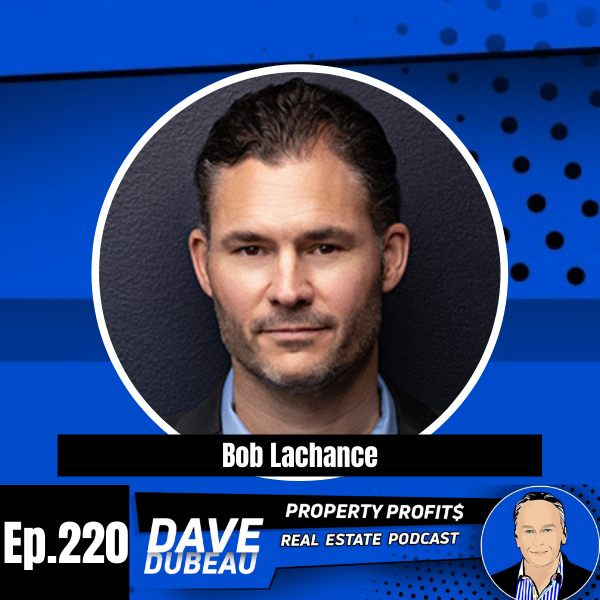
Bob Lachance is a nationally recognized speaker, mentor, and trainer who specializes in helping customers build their businesses through automation and outsourcing. Bob currently owns four businesses and helped start one of the nation's largest real estate coaching programs. A Bristol, CT native, Bob played ice hockey and went on to play at Boston University, playing a vital role in their 1995 National Championship. With only two classes left to graduate in his senior spring, he dropped out of school and signed a professional contract with the St Louis Blues Organization. Bob went on to play for eight years professionally, four years in the US and four years in Europe.
In this episode, Bob shares how virtual assistants can help drive in the business for you, pointing out tasks they do best and what you can offload to them. At the same time, he underscores why there is one thing that you never have to leave up to virtual assistants to do.
Checkout: Raising Capital Without Rejection Full-Day Workshop (Online): https://investorattractionworkshop.com/
What you'll learn in just 17 minutes from today's episode:
Find out how virtual assistants can help you take back your time and focus on more important aspects of your business
Learn about the tasks that you can delegate to virtual assistants and get things done faster and better in your business
Discover the system to set up from where virtual assistants could build up buyers' lists
Resources/Links:
Website: https://revaglobal.com/
Topics Covered:
00:46 - Why he jumps from NHL to real estate
01:44 - The first deal he got into when he first started
03:48 - How the idea about virtual assistants came to be, and when did he start hiring virtual assistants
05:07 - Where virtual assistants were of most help when he began utilizing them
06:28 - Tasks VAs focus on when working for wholesalers
08:25 - Systems and training that are in place to build buyers' lists
09:21 - How does it look like working with virtual assistants
10:27 - Jobs you don't want to leave up to virtual assistants
12:27 - How his company helps with client-VA expectations and clear communication
14:50 - The scope of what a VA can do cold calling in a day and how much of it translates into appointments and finally into deals
Key Takeaways:
"In our businesses, if we're doing a $10 an hour task, that typically means we have $10 in our bank account. I started really peeling back the layers of my business and saw where all of my time was spent. That's when I started out offloading those types of tasks." - Bob Lachance
"I always say if you hire a bookkeeper to make cold calls, it's going to fail miserably. Make sure you know the makeup of the individual that you hire to bring on your team, whether it's a virtual assistant in the Philippines, whether it's someone in your own hometown that's going to be doing work for you." - Bob Lachance
"Do yourself a favor and use a virtual assistant to drive in business for you. But it's our job, your job, my job to lock up those deals and turn those into money." - Bob Lachance
"We actually help with that [clear communication]. We have a client service manager overseeing the VA and client relationships. So they help create a success map right up front." - Bob Lachance
Connect with Bob Lachance:
Website: https://revaglobal.com/
LinkedIn: https://www.linkedin.com/in/boblachance/
Facebook: https://www.facebook.com/robert.lachance.10
Connect with Dave Dubeau:
Podcast: http://www.propertyprofitspodcast.com/
Website: https://davedubeau.com/home
Investor Attraction Workshop: http://www.investorattractionworkshop.com/
Facebook: https://www.facebook.com/thedavedubeau
LinkedIn: http://linkedin.com/in/davedubeau
Enjoyed the Podcast?
Please subscribe on iTunes for updates

Monday Jan 10, 2022
Monday Jan 10, 2022
Chris Larsen is the founder and Managing Partner of Next-Level Income, through which he helps investors become financially independent through education and investment opportunities. Chris has been investing in and managing real estate for over 20 years. While completing his degree in Biomechanical Engineering and M.B.A. in Finance at Virginia Tech, he bought his first single-family rental at age 21. During his subsequent career in the medical device industry, Chris expanded into development, private-lending, buying distressed debt as well as commercial offices, and ultimately syndicating multifamily properties.
In this episode, Chris shares the driving force that got him into real estate. He relates how he started with single-family rentals for many years and eventually moved up to syndication of multifamily properties. He talks about what got him into that strategy and finding deals, raising funds, and property management.
Checkout: Raising Capital Without Rejection Full-Day Workshop (Online): https://investorattractionworkshop.com/
What you'll learn in just 17 minutes from today's episode:
Learn how to get dialed into your why do you find meaning in what you do
Find out an investment strategy that has less risk but does well revenue-wise
Discover how this investment portfolio makes so much sense from the demographic perspective as well as from the scale aspect
Resources/Links:
Get Chris' book for FREE, 'Next-Level Income: How to Make, Keep, and Grow Your Money Using the "Holy Grail of Real Estate" to Achieve Financial independence'. Download here: https://www.nextlevelincome.com/book
Topics Covered:
01:02 - His professional background before real estate
01:52 - The two most valuable reasons that drive him to focus on real estate
05:55 - Where the influence of having an entrepreneurial mindset came from
10:02 - How to go about syndication
12:51 - What does it look like for him in terms of finding deals, looking for capital partners, and property management
14:13 - How his portfolio looks like now compared to years ago
14:54 - Venturing into larger apartment buildings these days
16:29 - Chris' inspiring words
Key Takeaways:
"If I can get on a track where I can be financially independent, I can really live my best life and do that. So I set this plan in place to be an investor. I bought my first property at age 21. More than two decades ago, I transitioned that portfolio into multifamily real estate commercial which is what we focus on today." - Chris Larsen
"Why we found Next Level Income was to teach people shortcuts to become financially independent. That's the reason why we now syndicate deals, because, obviously, it's a way for us to buy bigger deals and have less risk and do well as general partners." - Chris Larsen
Connect with Chris Larsen:
Website: https://www.nextlevelincome.com/
LinkedIn: https://www.linkedin.com/in/nextlevelincome/
Facebook: https://www.facebook.com/nextlevelincomeshow
Instagram: https://www.instagram.com/thenextlevelincomeshow/
Connect with Dave Dubeau:
Podcast: http://www.propertyprofitspodcast.com/
Website: https://davedubeau.com/home
Investor Attraction Workshop: http://www.investorattractionworkshop.com/
Facebook: https://www.facebook.com/thedavedubeau
LinkedIn: http://linkedin.com/in/davedubeau
Enjoyed the Podcast?
Please subscribe on iTunes for updates

Thursday Jan 06, 2022
Thursday Jan 06, 2022
Austin Hair is a business development manager with Leaders Real Estate. He is an experienced investor and a previous small business owner. He brings his background in networking, marketing, and relationship-building from other industries to the world of commercial real estate development. His primary responsibilities include finding clients and raising capital.
In this episode, Austin shares how he and his investors tap into the healthcare professionals market by buying the real estate asset and their clients buying the practice. They act as landlords in the process. He also talks about how they build relationships and find dream clients that increase a property's value. He also shares an effective marketing tool that helps in finding client tenants to work with.
Checkout: Raising Capital Without Rejection Full-Day Workshop (Online): https://investorattractionworkshop.com/
What you'll learn in just 17 minutes from today's episode:
Find out how to leverage technology to find perfect locations for your tenants’/clients' business
Learn how to find accredited tenants with a low-risk level but who add value to the property
Discover how to make a force appreciation on a real estate asset without doing anything to it
Resources/Links:
Website: https://leadersre.com
Topics Covered:
00:56 - How he tapped healthcare professionals to invest in real estate
04:27 - Location is everything
05:36 - Buying real estate on behalf of healthcare professionals
07:01 - How to increase a property's value as landlords
09:54 - What made him switch from the fitness industry to real estate
11:56 - Still doing brokerage but leaning more toward property development
12:43 - Finding accredited tenants
13:13 - Building relationships and not just being transactional
14:19 - Doing business all over many places, not just in one location
14:38 - Using local partners over local brokers to manage properties
16:50 - Making use of podcasting as a marketing strategy
Key Takeaways:
"What happens is, if a dental group wants to acquire an individual practice, the practice might be owned, like both the practice and the real estate might be owned by the doctor. You might want to sell that real estate as part of the transaction. And the group physically can't buy it right there. We'll come in and buy the real estate on their behalf or help them facilitate that transaction as well." Austin Hair
"We want the podcast to be mutually beneficial. And so we also will use it as a way to build relationships and network with other people. And so what that means is, if there's a client, somebody who we think would be an ideal client for us, we would invite them to come onto the show and figure out ways where they're also going to be benefiting from doing an interview." - Austin Hair
"What we do is we buy from the individual dentist the value based on him leasing it, and then we get the lease sign from the organization in order to increase the life of that building. And so significant money can be made on the upside. And that's where investors can be taken as well." - Austin Hair
Connect with Austin Hair:
Podcast: https://podcasts.apple.com/us/podcast/real-estate-secrets-for-healthcare-practices
Website: https://leadersre.com
Connect with Dave Dubeau:
Podcast: http://www.propertyprofitspodcast.com/
Website: https://davedubeau.com/home
Investor Attraction Workshop: http://www.investorattractionworkshop.com/
Facebook: https://www.facebook.com/thedavedubeau
LinkedIn: http://linkedin.com/in/davedubeau
Enjoyed the Podcast?
Please subscribe on iTunes for updates